
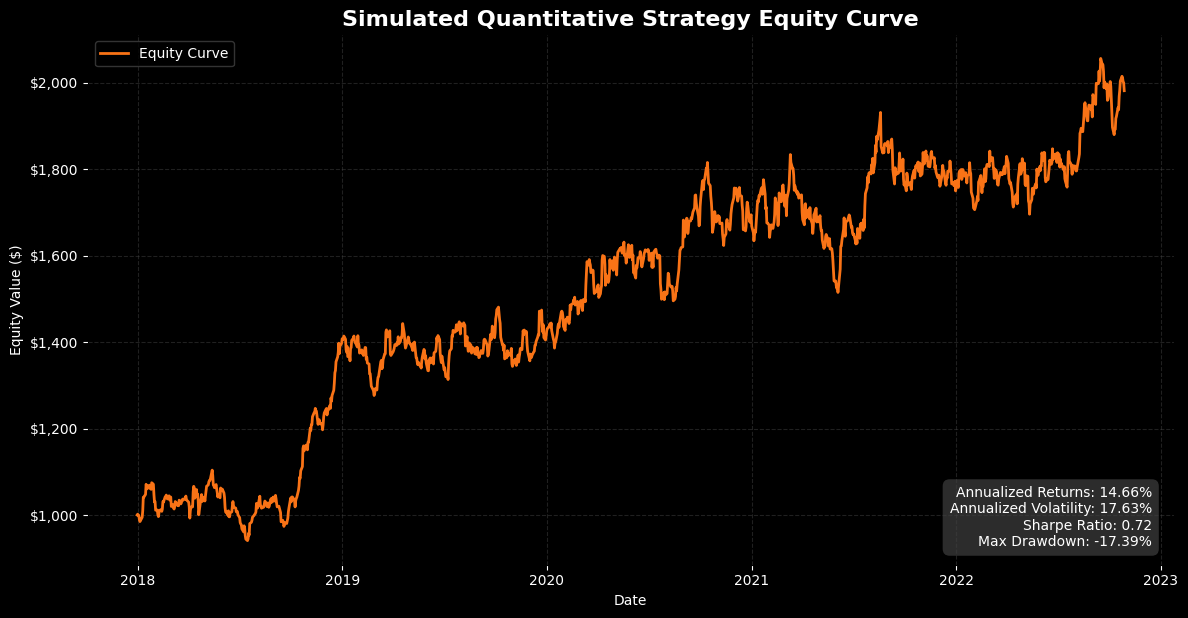
It's common for a portfolio manager at a small or medium-sized investment firm to spend entire days sifting through spreadsheets of historical data, trying to identify patterns or validate a new trading hypothesis. Every Friday, for instance, the same scene repeats: hours dedicated to manual analysis to fine-tune a momentum strategy or understand a portfolio's sensitivity to specific risk factors. It's an intensive, repetitive process, and critically, limited by human processing capacity.
This scenario, which we regularly observe in the projects we handle, highlights the central challenge of quantitative finance for SMEs: the enormous volume of data and the complexity of models demand computational and analytical resources that, until recently, were exclusively the domain of large investment banks. Today, however, the integration of artificial intelligence and machine learning is redefining the playing field, making highly advanced techniques for asset pricing, risk management, and predictive signal identification accessible to smaller firms.
From Raw Data to Predictive Insight: The Role of AI
The first hurdle in any quantitative strategy is always data management. Dynamic markets mean constant information flows: from stock prices to macroeconomic data, corporate reports to social media sentiment. For an SME, collecting, cleaning, and structuring this data effectively is already a significant undertaking. This is where AI-augmented tools make all the difference.
Instead of manual scripts or semi-automatic processes requiring constant intervention, we can implement automated data pipelines. Utilizing frameworks like Polars for rapid processing of large datasets or AI agents specialized in data normalization and enrichment, a team of two or three people can manage data streams that previously occupied an entire department. These agents can identify anomalies, impute missing data, and even categorize financial news, transforming hours of work into minutes.
For example, a machine learning algorithm can be trained to recognize non-linear patterns in market data that would evade traditional statistical analysis. We're talking about predictive signals for factor returns (i.e., returns associated with specific risk factors like value, quality, or momentum) that aren't immediately obvious. The ability to simultaneously process thousands of variables is the true added value, allowing for the construction of more robust models less subject to human biases. This isn't a purely technical exercise: it means moving from mere correlation to identifying deeper and potentially more profitable relationships.
Optimizing Strategies and Managing Risk with AI

Once data is clean and signals are identified, the next phase is strategy construction and optimization. Here, AI doesn't just suggest; it simulates and refines. Momentum strategies, for instance, can be continuously improved by algorithms that adapt parameters (calculation periods, entry/exit thresholds) in real-time, based on prevailing market conditions. This isn't about entrusting the final decision to AI, but rather using it as a co-pilot capable of exploring a number of scenarios and combinations that would be impossible for a human team.
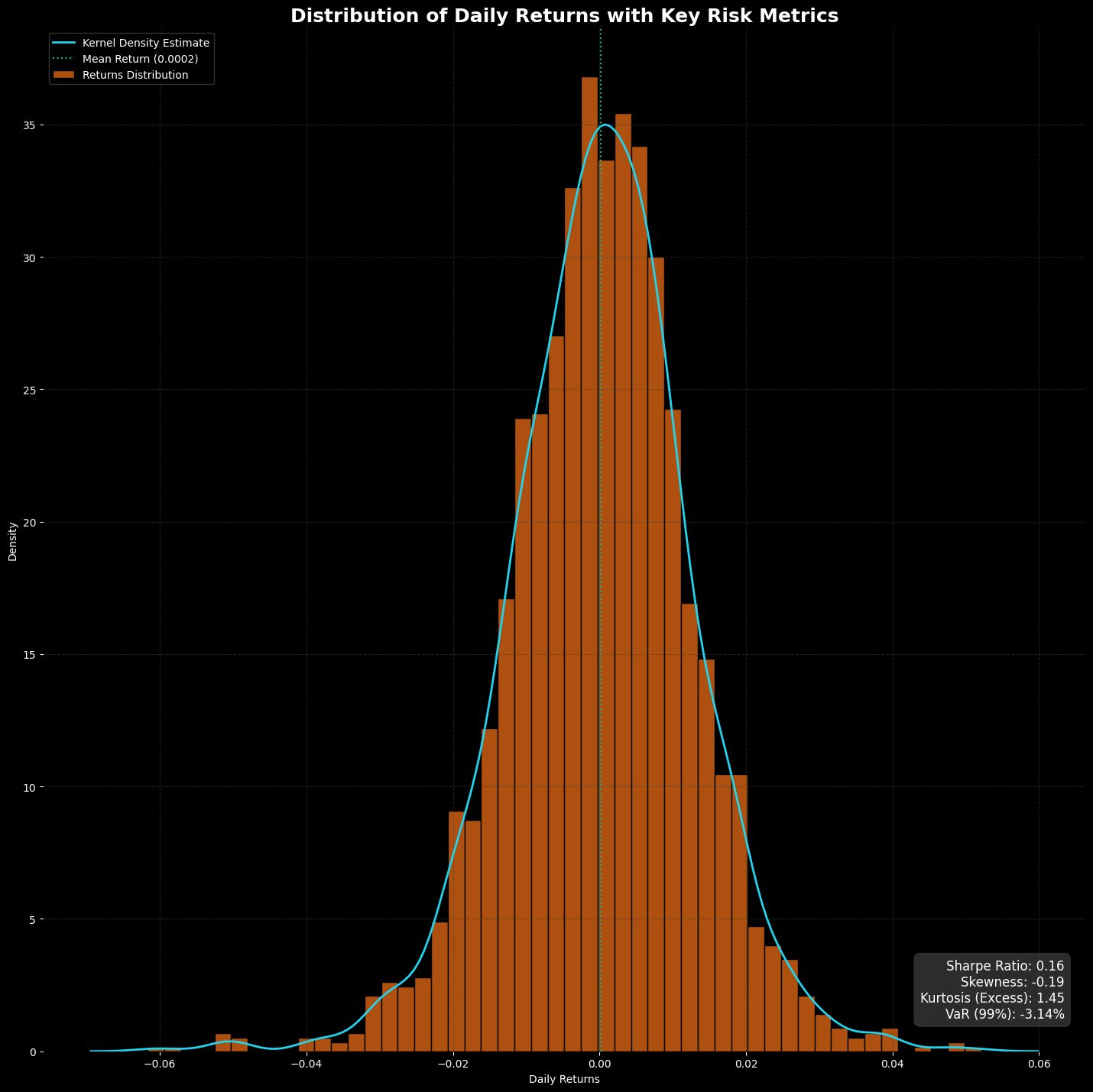
Consider risk management: an area of maximum complexity. Stochastic volatility models, like those based on Heston processes or Monte Carlo techniques, are computationally intensive. Simulating thousands of price paths to assess a portfolio's VaR (Value at Risk) or ES (Expected Shortfall) requires time and processing power. Here, integrating machine learning techniques with these traditional models can drastically accelerate the process. AI can learn from previous simulations, optimize sampling, or even generate more realistic and diverse stress test scenarios, reducing analysis times from days to just a few hours.
Another application is dynamic portfolio allocation. Instead of rebalancing the portfolio at fixed intervals, AI models can constantly monitor market conditions and suggest optimal reallocations based on specific risk-return objectives. This leads to operational efficiency and greater responsiveness to market changes, crucial aspects for an SME needing to maximize every opportunity.
Practical Impact and Implementation Timelines
Adopting these advanced methodologies doesn't require prohibitive investments. Often, starting with well-defined problems, it's possible to implement AI-augmented solutions quickly. For example, automating customer email classification for a fund management company, to rapidly address urgent requests or identify qualified leads, can be achieved with a local mini-LLM in 2-3 weeks, with an immediate impact on customer service and operational efficiency. Or, transitioning from weekly manual backtesting to daily AI-based automated analysis, which previously took full days, reduces to a few hours of targeted analysis, with solution implementation taking approximately 4-6 weeks.
In the projects we oversee, the key is a pragmatic approach: start with a concrete problem and a targeted solution, then scale. At Logika.studio, this translates into significantly faster implementation times compared to traditional channels, with the guarantee of 100% human review for every model deployed into production, which is fundamental in a regulated industry like finance.
These new frontiers of quantitative finance are no longer just theory for academics or the exclusive domain of Wall Street giants. They are concrete tools that SMEs can and must adopt to remain competitive, optimize their strategies, and make faster, more informed decisions. The goal is to transform complexity into a strategic advantage, even with limited resources.
If you want to delve deeper into how to apply these methodologies to your business or evaluate a specific use case, a free 15-minute audit is available at audit — quick analysis, 2-3 concrete points, zero pitch.