

The artificial intelligence landscape is anything but static. Every month brings innovations that redefine possibilities, from model power to implementation methods. For businesses focused on efficiency and innovation, staying ahead isn't an option—it's a strategic imperative.
Model Advancements and the Cloud Ecosystem

The evolution of language models is relentless. Recent releases like Mistral Medium 3.5 demonstrate increasingly refined reasoning and context understanding capabilities, positioning them as competitive alternatives to industry giants for specific use cases, often with a more advantageous cost-performance ratio. It's not just about 'bigger is better,' but about finding the most suitable model for the specific problem we aim to solve.
Concurrently, the expansion of AI APIs within cloud ecosystems is redefining access to this technology. The availability of OpenAI models on platforms like AWS Bedrock is a prime example. This strategy offers greater flexibility and resilience, preventing companies from being 'locked-in' with a single infrastructure or model provider. It means being able to orchestrate multi-model solutions, choosing the best tool for each phase of a process, optimizing performance and costs. This approach is akin to managing a specialized team, where each member brings their unique expertise to achieve a common goal.
The Advantage of Local and Open-Source AI: Control and Costs
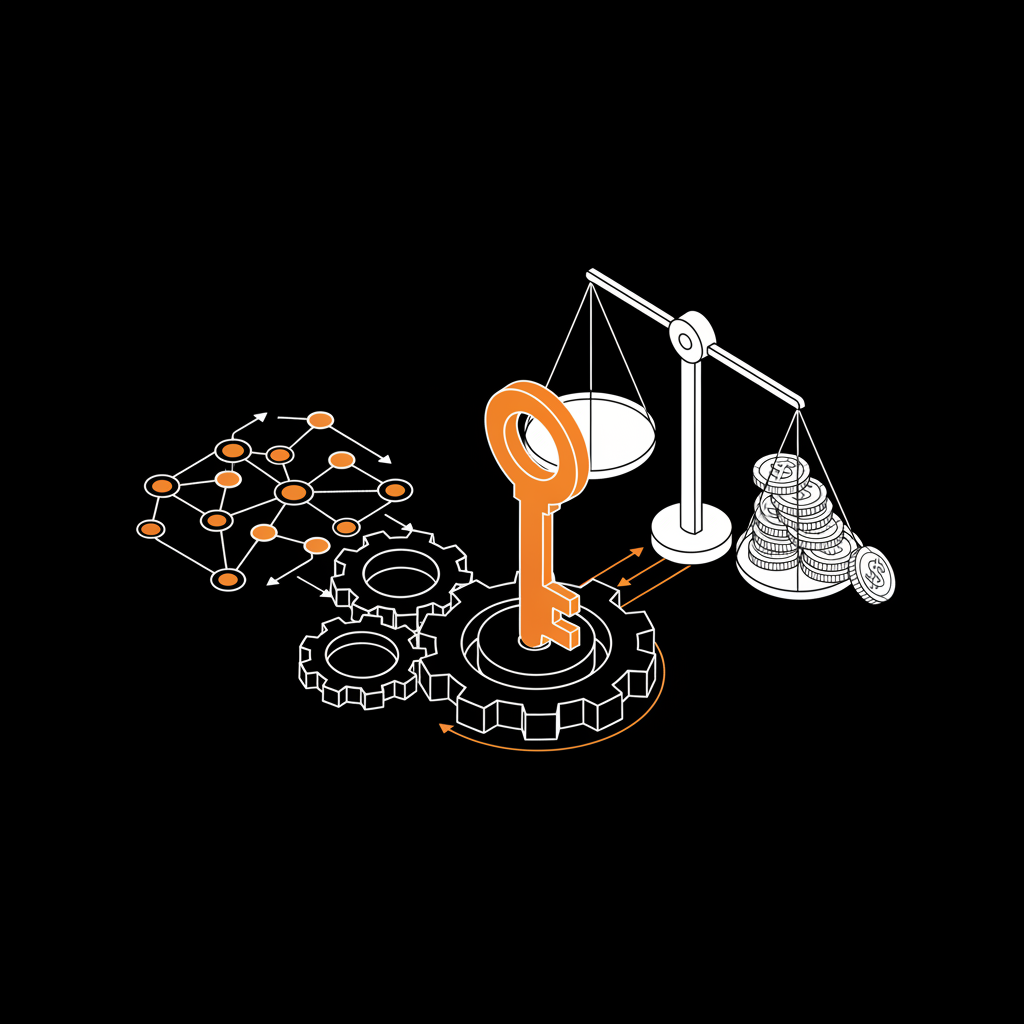
While the cloud offers scalability, the trend towards local and open-source AI is gaining traction, especially for SMEs and startups requiring greater control over data and costs. Solutions like Lemonade for local models or VibeVoice for voice processing offer the ability to perform inferences directly on internal servers or devices, with significant advantages:
- Enhanced Privacy and Security: Sensitive data remains within the company's infrastructure.
- Reduced Latency: Inferences occur more quickly without reliance on external connectivity.
- Predictable Costs: Eliminates fluctuations tied to cloud API consumption, offering better budget control.
- Deep Customization: The open-source nature allows models to be adapted to specific business needs, a flexibility unattainable with proprietary APIs.
This approach is particularly relevant for sectors with stringent regulatory requirements or for applications demanding real-time responses. Imagine a predictive analytics system in a factory or a voice assistant for warehouse management, where data speed and security are crucial.
Impact on Application Development: Robustness and Reasoning
These developments are not separate from software development strategies. In fact, they directly influence architectural design.
Concurrency and Scalability with Swift 6
Concurrency management is increasingly crucial. With the advent of Swift 6, for instance, robustness in handling parallel tasks becomes a cornerstone for complex AI applications. Coordinating multiple calls to different models, processing real-time data, and maintaining a responsive user interface demands a solid software architecture. Here, the ability of efficient orchestrators—like our 'digital agents'—becomes essential to ensure each component works in harmony, maximizing overall efficiency.
Advanced Reasoning Techniques
To tackle complex problems, AI models require more than just a 'quick answer.' The emergence of advanced reasoning techniques is key. Methodologies like Chain of Thought (CoT) or Tree of Thought (ToT) enable models to break down a complex problem into smaller, logical steps, simulating a structured thought process.
- Chain of Thought (CoT): Guides the model to display its intermediate steps before reaching the final answer. This not only improves accuracy but also makes the process more transparent and debuggable. Useful for financial analysis or technical problem-solving.
- Tree of Thought (ToT): Goes further, exploring various 'branches' of thought, evaluating alternatives, and choosing the most promising path. Ideal for complex decision-making scenarios or process optimization.
Implementing these techniques means designing AI agents capable of 'thinking' in a more sophisticated manner, replicating the problem-solving approach of an expert human team, but with the speed and scalability of software. Tools like LangChain or data manipulation libraries such as Polars then become invaluable allies for orchestrating these processes and managing information flows.
Strategies for Navigating the AI Landscape
The rapid evolution of AI offers unprecedented opportunities, but requires carefully considered strategic choices. Whether integrating Claude, Gemini, or OpenAI models in the cloud, or developing custom open-source AI solutions for full control, the key is to adopt an agile and informed approach. It's not enough to simply use AI; you must know how to orchestrate it to maximize value, ensure security, and optimize costs. The question for SMEs is no longer 'will we use AI?', but 'how can we best use it for our specific objectives?'.