

Last week, I was reminded of a common scenario: a sales representative, let's call him Mark, at a manufacturing company with about 70 employees, once again found himself preparing a complex quote. This wasn't just any quote; it required cross-referencing data from an old AS400, checking stock levels on a Zucchetti ERP system, and then assembling everything into a personalized PDF document, complete with specific legal clauses tailored to the client type and product. Four hours, every single time. Four hours that often ate into Friday afternoons, stealing valuable time from more strategic activities or, worse, from the weekend. It was a clear, recurring signal that a manual, time-consuming process was ripe for evolution.
This scene isn't isolated. In Italian SMEs, scenarios like Mark's are the norm. The quoting process, especially for complex and customized proposals, consumes a surprising amount of time and resources. We're talking about hours spent retrieving information from heterogeneous systems – outdated ERPs, Excel spreadsheets, internal databases – only to then manually transcribe, format, and adapt it. Every copy-paste is an opportunity for error, every quote a battle against the clock. The impact isn't just on an individual employee's time, but on the company's ability to respond quickly to requests, offer competitive bids, and free up human resources for higher-value tasks.
What if, instead of four hours, Mark spent twelve minutes? This is the scenario we've seen materialize in recent months across various contexts, thanks to the intelligent integration of AI-powered conversational agents. It's not about overhauling existing ERP systems, but about augmenting legacy tools with an AI assistant that acts as an expert co-pilot.
From Input to Quote: The Streamlined Workflow
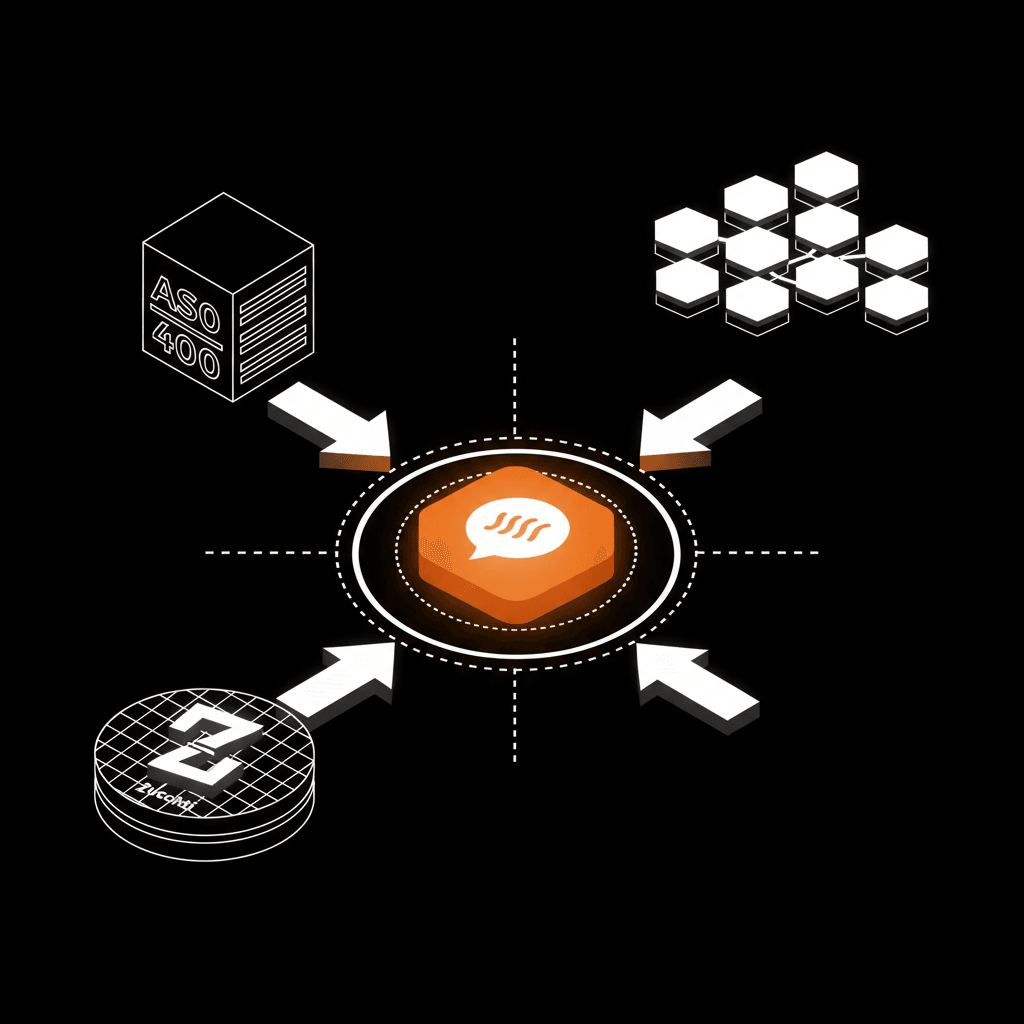
The core of this automation lies in the AI's ability to interact with existing systems and generate structured outputs. Imagine a conversational assistant – perhaps accessible via a simple web interface or directly from an internal communication tool like Microsoft Teams – that receives quote requests.
1. Intelligent Querying: Mark, or whoever needs to create a quote, no longer fills out forms. They type or speak a request in natural language: 'Quote for client Rossi, product X, quantity 500, delivery to Milan, standard clauses for SMEs.' The AI understands the request, identifies key parameters, and, through dedicated connectors (often called webhooks or custom APIs), connects to company systems. It queries the AS400 for client details and checks availability and pricing on the Zucchetti or Teamsystem ERP.
2. Processing and Personalization: At this point, the AI (often a model like Gemini, Claude, or GPT) processes the gathered information. It understands company rules for margins, discounts, and delivery times. It can access a database of predefined contractual clauses and select the relevant ones. The process is guided by defined logic, but the AI can also suggest alternatives or highlight potential issues. For the structured part, we leverage integration patterns that speak the language of legacy software, such as interaction with Message Queuing or Message Control Program (MCP) on older systems, or modern APIs where available.
3. Document Generation and Feedback: Once the information is collected and processed, the AI generates the complete quote, often in PDF format. This document can be ready for dispatch or may require a final review by Mark. The advantage? The sales rep receives a nearly finished quote, focusing on validation and fine-tuning, rather than assembling it from scratch. The entire cycle, from input to final draft, can be reduced to just a few minutes.
The time savings are evident: from four hours to twelve minutes per quote. But it's not just about efficiency. Human errors are drastically reduced, processes are standardized ensuring consistency in offerings, and staff are freed from repetitive tasks, allowing them to focus on relationship building, sales strategy, or exploring new opportunities. It's an investment that pays off not only in hours but in service quality and competitive advantage.
Integrating with Existing Systems: Bridging the Past
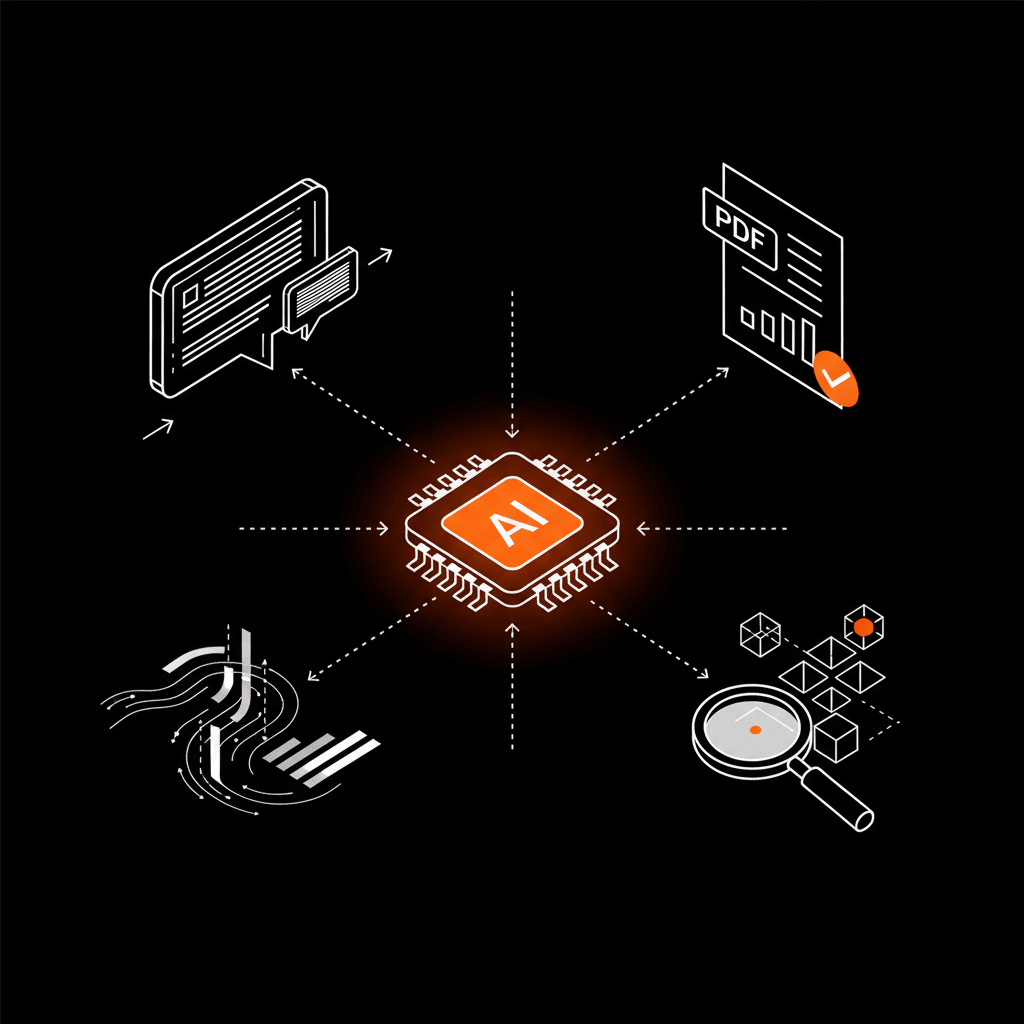
One of the biggest fears for SMEs is having to discard significant infrastructure investments, such as an ERP system that has been refined over decades. The good news is that an AI-augmented approach rarely requires a revolution. The key is integration. We use a combination of tools and strategies:
- Custom APIs: Where legacy systems expose APIs (programming interfaces), we leverage them to create a direct bridge.
- Message Queuing / MCP: For older software like AS400, we implement
Message QueuingorMessage Control Program(MCP) solutions that allow AI to 'dialogue' asynchronously, sending and receiving data without impacting the stability of the main system. This minimizes crash risks and ensures full code ownership for the client. - Low-Code/No-Code (n8n, Zapier): To connect more modern services or manage less complex data flows, tools like n8n or Zapier can significantly accelerate development, acting as orchestrators.
This integration flexibility is crucial and allows us to operate on any cloud or on-premise environment, always maintaining 100% human review for critical results.
Practical Considerations and Mitigated Risks
Implementing such a solution requires a pragmatic approach. It's not about fully delegating sales to a machine, but about equipping it with tools to be more effective. Key risks include the quality of input data – AI is only as good as the data it receives – and the necessity of human supervision.
At Logika.studio, our approach always includes an initial phase of in-depth analysis of existing processes and data. AI governance is an aspect we integrate from the design phase, ensuring the model is trained on relevant data and that the output is always verifiable. The goal isn't to replace, but to empower.
How long does implementation take? For a use case like quote generation, after an analysis phase (1-2 weeks), implementing the base solution, including integration with 2-3 legacy systems, can take between 4 and 8 weeks. This commitment delivers a tangible ROI within a few months, freeing up hundreds of hours of manual work annually.
If you want to explore a similar use case within your company and understand where AI can make a difference in your daily processes, a free 30-minute audit is available at logikastudio.it/audit — quick analysis, 2-3 concrete insights, zero pitch.